

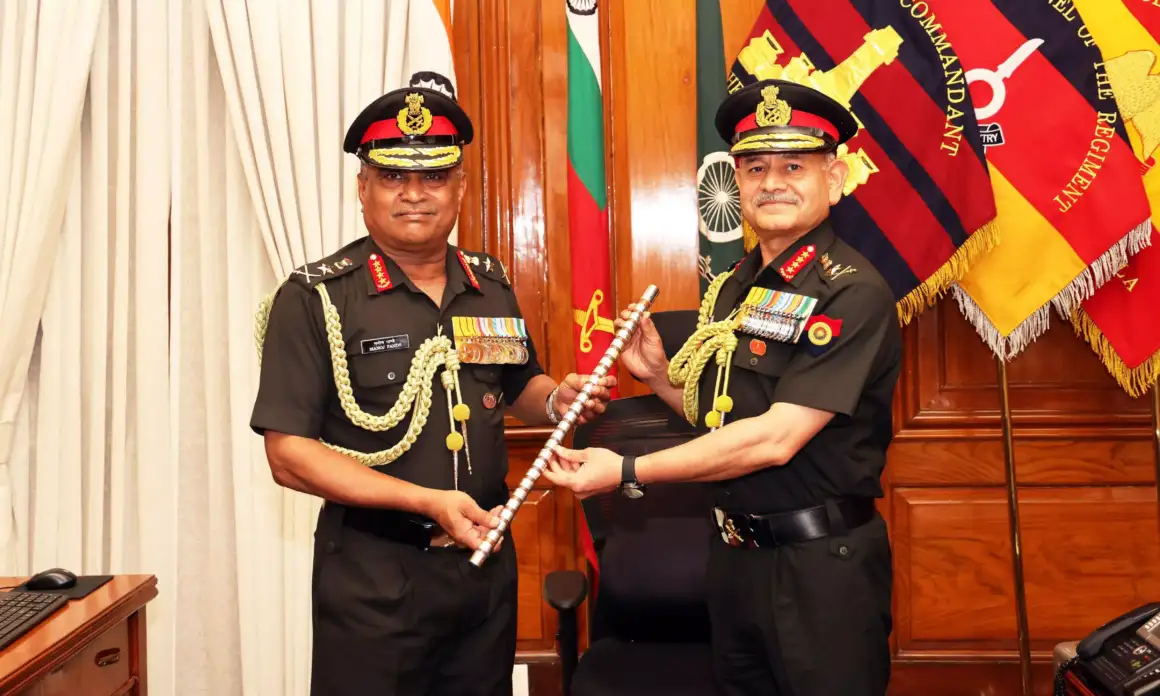
New Delhi: Chief of Army Staff General Upendra Dwivedi on Saturday indicated that India’s military forces remain in a sustained state of preparedness following recent security developments along the border. He remarked that the existing operational posture adopted after earlier cross-border tensions is still active, describing the current phase as a temporary pause in active hostilities rather than a conclusion of the situation.
Future Military Response Framework, Emphasises Modernisation Drive
General Dwivedi suggested that the armed forces are factoring in the possibility of future escalations. He referred to “Operation Sindoor 2.0” as a conceptual continuation of preparedness, stating that all three services—Army, Air Force, and Navy—are aligned to respond collectively if required.
He further explained that India’s military structure is being refined to improve coordination among the services, with emphasis on round-the-clock readiness and preparedness for modern warfare scenarios.
According to the Army Chief, evolving battlefield conditions now involve high levels of transparency due to advanced surveillance and intelligence systems. He said this requires greater precision in operational planning, troop deployment, and protection of both military personnel and civilians in sensitive regions.
General Dwivedi also highlighted the importance of information warfare in modern conflicts. He noted that national unity and trust in official communication channels play a decisive role in shaping outcomes during times of tension.
He added that when a nation remains aligned in its understanding of events and supports its institutions, it strengthens overall resilience in any security environment.
The statement comes in the backdrop of India’s earlier military response to cross-border terrorism incidents, which followed heightened tensions triggered by the Pahalgam attack in South Kashmir, where multiple civilians lost their lives.
India’s previous operation, launched in response, marked a coordinated tri-services action and set the context for the current state of heightened alert and preparedness.