

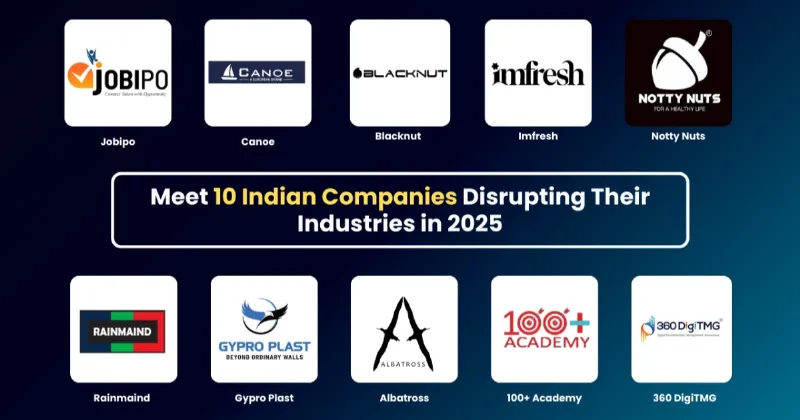
While headlines are dominated by unicorn funding rounds and celebrity-backed ventures, a quieter but far more transformative shift is unfolding across India’s startup ecosystem. In small offices, university labs, and tier-2 cities, a new class of startups is emerging — companies that are not chasing hype but solving deeply rooted problems through innovation, technology, and unconventional thinking. These “silent disruptors” are redefining what success looks like in 2025, focusing on sustainability, real-world impact, and long-term value rather than short-term valuations Across sectors such as agritech, health diagnostics, clean energy, deep tech, and creator-driven media, these startups are building solutions that often go unnoticed by mainstream media. Unlike venture-fuelled giants, many operate with lean teams, limited marketing budgets, and a strong dependence on research and partnerships rather than aggressive advertising. Yet their influence is growing steadily, supported by changing consumer behavior, government-backed innovation policies, and a global demand for practical, scalable solutions.
How India’s Lesser-Known Startups Are Quietly Redefining Innovation in 2025
SILENT DISruptors
One of the most notable trends among these lesser-known startups is the rise of problem-first innovation. Instead of building products to fit investor narratives, founders are starting with local challenges — water scarcity, affordable diagnostics, supply chain inefficiencies, and digital literacy gaps. For example, several early-stage startups in central and eastern India are using low-cost sensors and AI-driven analytics to help small farmers predict crop diseases before damage spreads. These solutions may not generate viral headlines, but they directly impact livelihoods and food security.
Another defining shift is the decentralization of innovation. For years, Bengaluru, Mumbai, and Delhi dominated the startup map. Today, cities like Indore, Coimbatore, Kochi, Jaipur, and Bhubaneswar are producing founders who are deeply connected to regional needs. Access to cloud infrastructure, remote work culture, and online accelerators has reduced the dependency on metro-centric ecosystems. As a result, innovation is becoming more inclusive, culturally grounded, and resilient.
In the business and enterprise space, lesser-known B2B startups are quietly reshaping how companies operate. From AI-powered compliance tools for MSMEs to workflow automation platforms built specifically for Indian businesses, these ventures are filling gaps that global SaaS products often overlook. Their strength lies in localization — understanding regulatory complexity, pricing sensitivity, and operational realities unique to emerging markets.
The creative and media landscape is also undergoing a subtle transformation. Beyond big OTT platforms and mainstream production houses, independent studios and micro-content startups are experimenting with short-form storytelling, regional narratives, and mobile-first formats. These creators are blending drama, social commentary, and technology to engage audiences who feel underrepresented in conventional entertainment. What was once considered “niche content” is slowly becoming a powerful cultural force, driven by authenticity rather than scale.
Funding dynamics are evolving alongside this shift. While mega funding rounds have slowed globally, alternative financing models are gaining traction. Angel syndicates, university-linked funds, revenue-based financing, and strategic corporate partnerships are helping early-stage startups survive without excessive dilution. This has encouraged founders to focus on profitability and sustainability earlier in their journey — a marked departure from the growth-at-all-costs mindset of previous years.
Government policies and academic institutions are playing a quiet but crucial role in this transformation. Incubators linked to universities, public research labs, and state-level startup missions are providing infrastructure, mentorship, and early validation. These platforms are particularly important for deep-tech startups, where long development cycles and high R&D costs make traditional venture funding difficult in the initial stages.
What makes these silent disruptors especially relevant in 2025 is their alignment with global priorities. Climate responsibility, ethical AI, affordable healthcare, and inclusive digital access are no longer optional — they are essential. Startups that address these areas with grounded, scalable solutions are increasingly attracting international attention, partnerships, and export opportunities, even if they remain relatively unknown at home.
The story of India’s startup ecosystem is no longer just about unicorns and valuations. It is about resilience, relevance, and responsible innovation. As markets mature and consumer awareness deepens, the spotlight is slowly shifting toward companies that create real value rather than noise. These lesser-known startups may not trend on social media today, but they are building the foundations of tomorrow’s economy.
In the coming years, many of these quiet innovators will likely emerge as category leaders — not because they chased attention, but because they stayed focused on impact. For readers, investors, and policymakers, understanding this undercurrent is essential. The future of innovation may not always be loud, but it is undoubtedly being shaped by those who work silently, consistently, and purposefully.