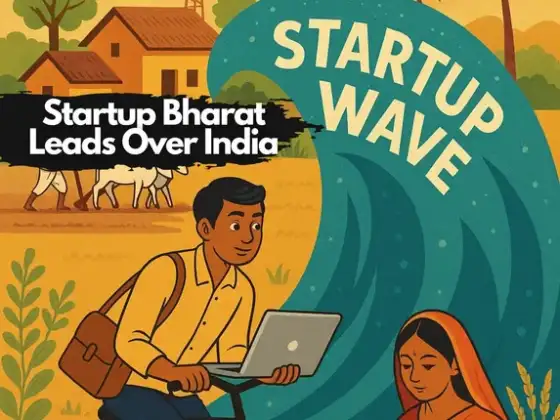

For much of the last decade, India’s fintech revolution was defined by flashy apps, aggressive marketing, and rapid customer acquisition. Digital wallets, trading platforms, and instant credit products dominated headlines, often targeting urban, English-speaking users. In 2025, however, a quieter but far more consequential fintech movement is underway — one that is focused not on scale through spectacle, but on inclusion, trust, and everyday utility for “Real India.”
The Quiet Fintech Boom: Financial Tools Built for Real India
SILENT DISruptors
This quiet fintech boom is being driven by startups that are deliberately building for small traders, rural entrepreneurs, gig workers, informal businesses, and first-time digital finance users. These companies may not trend on social media or announce massive funding rounds, but they are steadily reshaping how millions of Indians access, manage, and understand money.
At the heart of this shift is a simple realization: most Indians do not need complex financial products. They need clarity, reliability, and tools that work within their realities. For a kirana store owner, a street vendor, or a small transport operator, financial technology must be intuitive, language-friendly, and deeply trustworthy. Fintech startups responding to this need are prioritizing simplicity over sophistication.
One of the defining features of this new wave is vernacular-first design. Unlike earlier platforms that assumed English literacy and smartphone fluency, newer fintech tools are being built with regional languages, voice interfaces, and visual cues. This has significantly reduced friction for users who were previously excluded from formal financial systems despite having access to smartphones and the internet.
Another major shift is the focus on cash-flow understanding rather than credit push. Earlier fintech models aggressively promoted loans and buy-now-pay-later products, often without sufficient financial education. Today’s quieter fintech startups are instead offering tools that help users track income, expenses, and payment cycles. By improving financial visibility, these platforms enable better decision-making and responsible borrowing — a crucial change for long-term financial health.
Fintech solutions for small and informal businesses are also evolving beyond payments. Tools for invoicing, GST compliance, inventory-linked lending, and digital bookkeeping are gaining traction. These products are designed not as standalone apps, but as daily-use utilities that integrate seamlessly into business operations. Adoption is growing steadily through word-of-mouth rather than marketing blitzes, reflecting genuine value creation.
Trust plays a central role in this ecosystem. For many users, especially in semi-urban and rural areas, financial decisions are deeply personal and risk-sensitive. Startups are addressing this by building transparent pricing models, offering human-assisted onboarding, and partnering with local institutions such as cooperatives, self-help groups, and microfinance networks. This community-based approach contrasts sharply with the impersonal, app-only strategies of the past.
Regulatory maturity has also contributed to the quiet boom. India’s digital public infrastructure — including Aadhaar, UPI, and account aggregators — has created a stable foundation for innovation. Instead of reinventing systems, fintech startups are building smart layers on top of these platforms, enabling interoperability and reducing operational complexity. This has lowered entry barriers for both founders and users.
Another notable trend is the rise of financial tools for gig and informal workers. Delivery partners, drivers, freelancers, and daily-wage earners often face irregular incomes and limited access to traditional banking. New fintech platforms are addressing this gap by offering income-smoothing tools, flexible savings options, and instant settlements. These solutions acknowledge the realities of non-linear earnings rather than forcing users into rigid financial structures.
Importantly, growth in this segment is measured and organic. Unlike consumer fintech apps that chase rapid scale, these startups prioritize retention, trust, and unit economics. Many reach operational sustainability with smaller user bases because their products are deeply embedded in daily workflows. This approach is attracting a different kind of investor interest — patient capital focused on long-term impact rather than quick exits.
The quiet fintech boom also reflects a broader cultural shift in entrepreneurship. Founders are increasingly choosing relevance over recognition. Instead of building products for pitch decks, they are building for users they personally understand. This grounded approach has resulted in solutions that may appear modest on the surface but create lasting financial empowerment.
Looking ahead, the future of fintech in India is unlikely to be dominated by a single super-app or viral innovation. It will be shaped by thousands of specialized, purpose-driven platforms solving specific problems with precision. These tools will not announce disruption — they will quietly become indispensable.
In redefining financial access for Real India, this new generation of fintech startups is proving that the most powerful innovations do not always arrive loudly. Sometimes, they grow steadily, earn trust slowly, and change lives silently.