
For much of the last decade, India’s fintech revolution was defined by flashy apps, aggressive marketing, and rapid customer acquisition. Digital wallets, trading platforms, and instant credit products dominated headlines, often targeting urban, English-speaking users. In 2025, however, a quieter but far more consequential fintech movement is underway — one that is focused not on scale through spectacle, but on inclusion, trust, and everyday utility for “Real India.”
Culturally, short-form drama is also expanding representation. Regional languages, local stories, and niche themes are finding audiences without needing mass-market appeal. Stories rooted in small towns, youth culture, workplace dynamics, or social realities are resonating strongly with viewers who feel underrepresented in mainstream cinema and television. This democratization of storytelling is one of the most powerful outcomes of the digital shift.
How Short-Form Storytelling Is Changing Entertainment
DRAMA
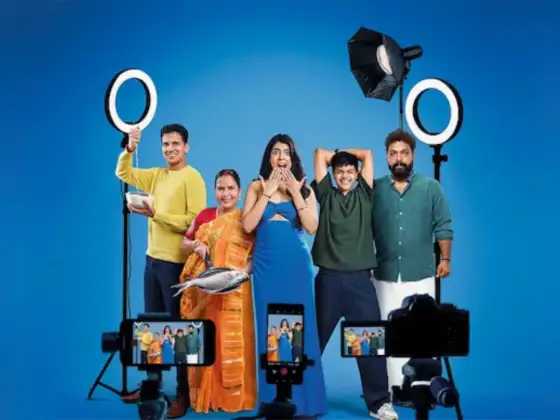
At the center of this shift is the audience itself. Viewers today increasingly consume content in fragmented moments — during commutes, breaks, or between daily tasks. Long-form narratives still hold value, but they demand time and commitment. Short-form drama, often delivered in episodes ranging from 30 seconds to five minutes, fits seamlessly into modern lifestyles. These bite-sized stories deliver emotional payoff quickly, making them highly engaging and repeatable.
Startups and independent studios are leading this evolution. Free from the constraints of traditional production cycles, they are experimenting with formats that blend cinematic storytelling with social media mechanics. Vertical video, cliffhanger endings, episodic releases, and rapid plot progression are becoming standard elements of digital drama. These narratives are designed to hook viewers instantly and keep them coming back — much like social media feeds themselves.
One of the most important innovations in short-form drama is format flexibility. Stories are no longer bound to linear storytelling alone. Some platforms allow interactive choices, alternate endings, or audience-driven plot developments. Others integrate comments, reactions, and shares into the storytelling experience, turning viewers into participants rather than passive consumers. This interactivity strengthens emotional investment and increases content longevity.
Technology has played a critical role in enabling this transformation. Affordable production tools, AI-assisted editing, and cloud-based distribution have dramatically lowered barriers to entry. Creators no longer need massive budgets or studio backing to reach millions. A small team with a strong script and smart distribution strategy can achieve scale that was once impossible outside mainstream media.
Monetization models are evolving alongside storytelling formats. Unlike traditional entertainment, which relies heavily on box office collections or subscription fees, short-form drama thrives on diverse revenue streams. Advertising integrations, brand placements, micro-payments, subscriptions, and even tipping systems are making digital drama commercially viable. Because production costs are lower, profitability can be achieved with smaller but more engaged audiences.
Brand collaborations are particularly reshaping the ecosystem. Instead of disruptive ads, brands are being woven organically into narratives. A product becomes part of the story, not an interruption. This approach enhances recall while preserving viewer experience, making it attractive for both creators and advertisers.
Culturally, short-form drama is also expanding representation. Regional languages, local stories, and niche themes are finding audiences without needing mass-market appeal. Stories rooted in small towns, youth culture, workplace dynamics, or social realities are resonating strongly with viewers who feel underrepresented in mainstream cinema and television. This democratization of storytelling is one of the most powerful outcomes of the digital shift.
Established studios and OTT platforms are watching this space closely. While long-form series and films will continue to coexist, the success of short-form drama is forcing traditional players to rethink content strategies. Some are launching vertical-video experiments, while others are acquiring or partnering with digital-first studios. The lines between social media content and professional entertainment are blurring rapidly.
Another key factor driving this trend is data-driven creativity. Digital platforms provide instant feedback — completion rates, drop-off points, rewatches, and audience reactions. Creators are using this data to refine storytelling in real time, adjusting pacing, character arcs, and episode length based on viewer behavior. This feedback loop allows for rapid experimentation and improvement, something traditional media rarely offered.
However, the rise of short-form drama also presents challenges. Oversaturation, content fatigue, and quality control are growing concerns. As more creators enter the space, standing out requires not just speed but originality and emotional depth. Sustainable success will depend on strong writing, authentic performances, and ethical monetization practices rather than click-driven sensationalism.
Looking ahead, the future of entertainment is not about replacing long-form storytelling, but expanding the ecosystem. Short-form drama is creating a new layer of entertainment — one that is agile, inclusive, and deeply aligned with how people live and consume content today. It serves as both an entry point for new talent and a testing ground for innovative storytelling techniques.
Drama has not become smaller; it has become smarter. As storytelling adapts to digital realities, the most successful creators will be those who understand that attention is earned quickly but trust is built over time. In this evolving landscape, short-form storytelling is not just a trend — it is a fundamental shift in how stories are told, shared, and remembered.