

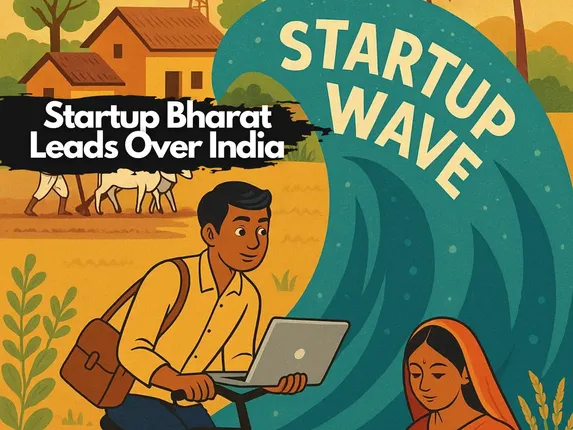
India’s startup narrative is undergoing a fundamental shift. For years, Bengaluru, Mumbai, and Delhi dominated entrepreneurship, funding, and innovation. In 2025, however, the country’s most compelling startup stories are increasingly emerging from tier-2 and tier-3 cities, reshaping the geography of India’s innovation economy. Cities such as Indore, Udaipur, Surat, Kochi, Nagpur, Ranchi, and Bhubaneswar are producing founders who are deeply connected to local realities. Unlike metro-centric startups that often build solutions from a distance, entrepreneurs in smaller cities are solving problems they experience firsthand — whether it is healthcare access, logistics inefficiencies, MSME digitization, or vernacular education gaps.
How India’s Small Towns Are Becoming the New Startup Powerhouses
SILENT DISruptors
One of the biggest enablers of this shift is affordability. Lower living costs allow founders to operate lean, extend runways, and experiment without the pressure of high burn rates. Combined with improved internet connectivity, cloud infrastructure, and remote-first work culture, geography has become far less of a limitation than it once was.
Government-backed incubators, state startup missions, and university-linked innovation centers are playing a crucial role in nurturing this growth. Programs offering seed funding, mentorship, regulatory support, and market access have empowered founders outside metros to build credible, scalable businesses. Many of these startups are focused on regional markets that were previously overlooked by global platforms.
Culturally, tier-2 cities offer a distinct advantage. Founders are closer to their users, operate within tight-knit communities, and build trust organically. This proximity leads to necessity-driven innovation rather than hype-driven products. As a result, many of these startups reach revenue stability faster and show stronger customer loyalty.
Post-pandemic talent migration has further accelerated this decentralization. Skilled professionals are returning to hometowns, bringing experience from large corporations and startups while enjoying better quality of life. This talent circulation is creating sustainable local ecosystems rather than isolated success stories.
India’s next wave of unicorns may not emerge from glass towers and co-working hubs. They are more likely to rise from grounded ecosystems — built on relevance, resilience, and real demand.